




















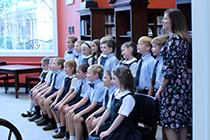

The value of a well-ordered school cannot be overstated. Children thrive when they have routines that are clear and consistent, and a school culture that is structured provides the framework for the most freedom. At New Covenant, our faculty and staff achieve this so well that, ironically, it can lead to misconceptions.
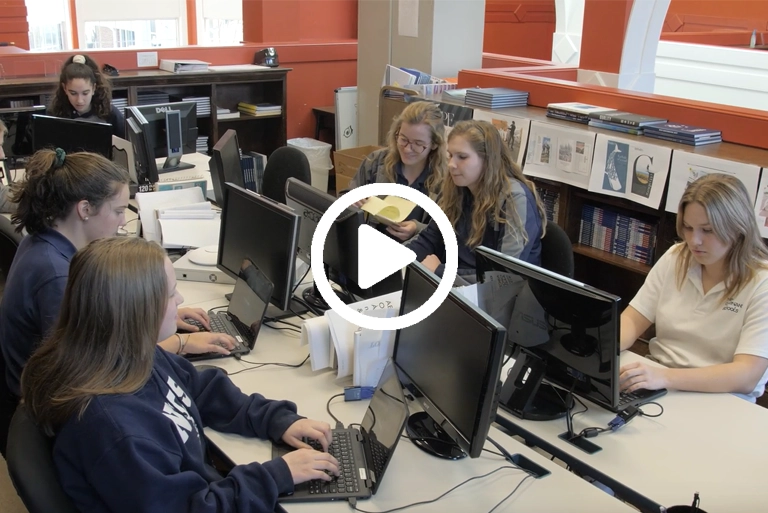
From time to time I meet prospective parents on tours, who divulge that they heard that New Covenant was “rigid.” When they take the tour, however, they see children on task, teacher-centered classrooms, and very happy students across the grades. They often remark on the freedom that flourishes, especially in the high school, where they see unsupervised students working independently in the senior lounge with their coffee pots and microwaves. I can see the gears churning as they try to square things they’ve heard about the school from what they actually see first hand. And what they see is a culture of students learning responsible behavior in an ordered but liberating environment.
There are two other ways that a well-ordered environment finds expression: predictability and support. Our consultants at Independent School Management (ISM) have conducted longitudinal research to determine the factors that contribute most powerfully to sustained academic achievement. With data from hundreds of schools they have found incontrovertibly that the biggest drivers—that is, the strongest corollaries to strong student performance—are predictability and support. Put simply, this refers to clear expectations compassionately delivered. We can think of these factors as the two rails on which a train runs. The rails are not the main thing, the train is, so these two “rails” are meticulously maintained.
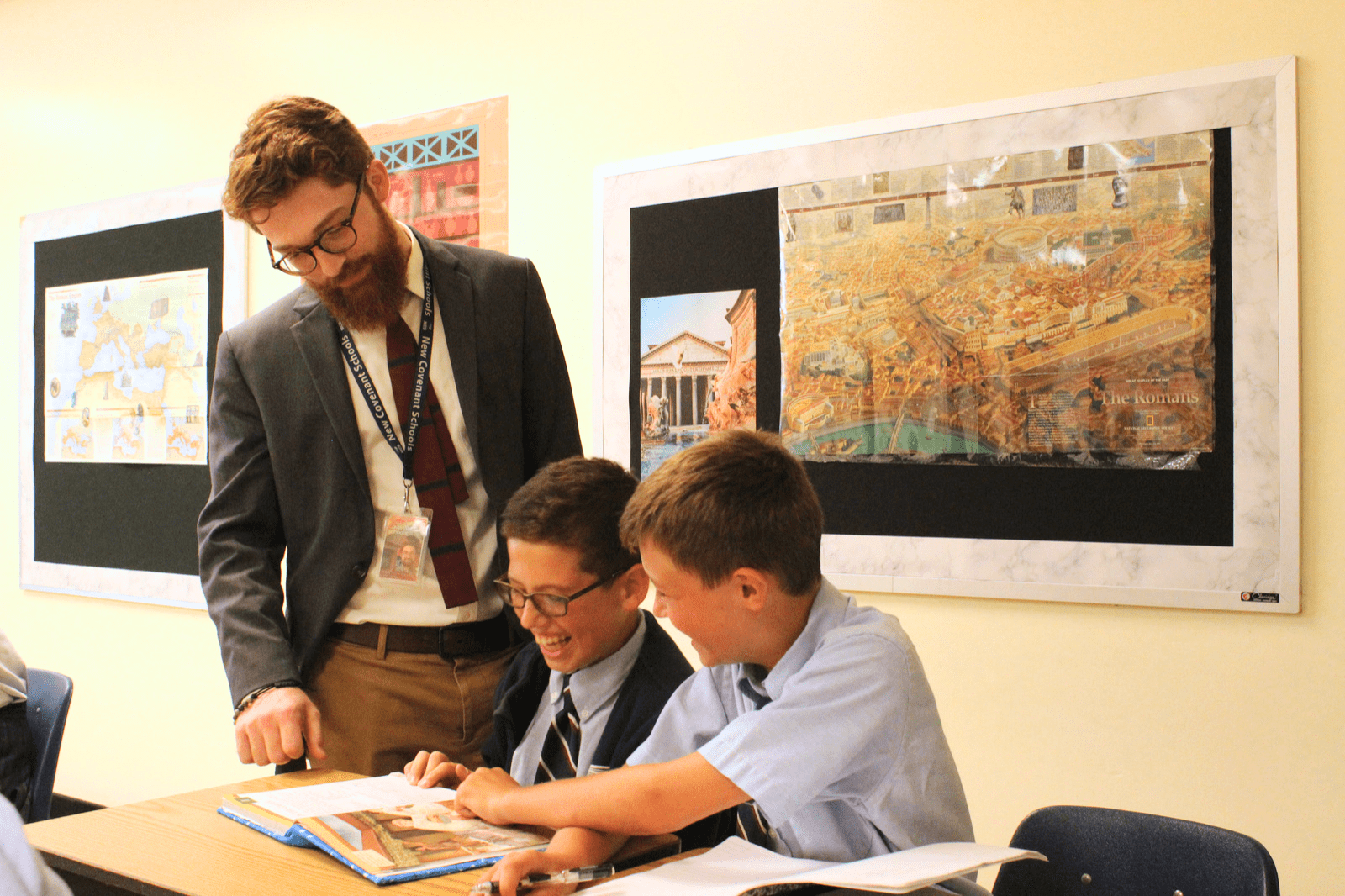
What do we mean by predictability? First, we mean that the “rule-reward” structure is strong, but also intelligible and fair from the student perspective. We measure this throughout the year with student surveys, and the responses we get from fifth grade and higher consistently confirm that our teachers excel at modeling the values and communicating the expectations of our community. This leads to the second element, that faculty responses are consistent, fair, and accurate from the student perspective both academically and behaviorally. Students consistently tell us that they knew what would be on the test, or that certain behaviors were permitted or not. They generally know that faculty demonstrate an evenness in their application of rules, policies, and procedures.
What do we mean by support? A well-ordered school culture can be rigid when it is not accompanied by high levels of support. We define support for your child as an environment where students perceive that the entire faculty, administration, and coaching staff genuinely seek the students’ success and work to achieve that success, without inflated reinforcement. A large part of a teacher’s task is to give constant feedback to students—feedback in regard to behavior, attitudes, character, and academic performance. By definition, a student could be made to feel relentlessly scrutinized, unless he enjoyed the natural and pervasive sense of compassion and the teacher’s conspicuous desire for student success. While reinforcement within a healthy community is accurate (“Samuel was caught cheating and will have to suffer the consequences”), accurate assessment is not contrary to compassionate delivery. Our teachers are constantly encouraged to be accurate and firm, yet speak with compassion.
Building a strong and stable school culture allows us to make mistakes, fall short, or overcommit, all of which we sometimes do. The goal, however, is to learn from such episodes. A healthy community recognizes human frailty and supports its members through the sometimes painful process of growth, and strives to create a willingness to try again and improve. This is at the heart of maintaining the educational community we aspire to be.